 SLiPStellenbosch Literary Project
  For general enquiries: info@slipnet.co.za
For content enquiries contact Dr. Wamuwi Mbao
To donate or translate contact Pieter Odendaal
SLiP, or the Stellenbosch Literary Project, was set up in February 2011 by Leon de Kock and Pieter Odendaal as a media and events platform to fast-track issues in South African literature and culture. The project is rooted in the Department of English at Stellenbosch University. Since our inception, we have gradually built up public literary-cultural platforms, both in the digital and analogue spheres. We believe that these platforms are an essential tool for those writers and performers that work at the creative edges of an emerging democracy. We therefore see ourselves as creating much-needed discursive platforms where creative literary practices can be shared and engaged with, where writers and performers can serve as mirrors for society.
Our activities can roughly be divided into three constituent parts: our website, (slipnet.co.za), our InZync poetry sessions and our community workshops. Each part aims to create a unique platform which extends the concept of the “literary” and enables new conversations to take place across a diversity of cultures and languages, bridging gaps between academia and civil society, performance and publishing, and to help stitch together the various holes which span our social fabric. Each platform caters to a different audience, though these audiences are not mutually exclusive, continuously cross-pollinating each other.
The Site
Our website designed by the Huemor web development agency slips sideways into the South African literary landscape, hand-picking texts to review, issues to blog about, videos and podcasts to share and events to cover. In short, we see ourselves as idiosyncratic curators of information relating to SA books and culture, opening up new possibilities of reading and writing, new lines of imaginative flight. We don’t try to be everything to everyone, but rather choose to concentrate on specific ‘hot’ topics in SA books and culture. SLiPnet also hosts the hugely popular Poetry Project, a monthly online writing workshop which develops voices from all walks of life. Our target web audience consists of writers/performers, avid readers, journalists, cultural critics and anyone who takes an interest in SA books and culture.
The development of critical writing skills is another crucial component of our website. Postgraduate students from the English Departments of Stellenbosch and Cape Town are mentored to produce reflective texts for publication. Furthermore, collaborations with aspiring writers and commentators are welcomed and actively encouraged.
The sessions
Our monthly InZync poetry sessions in Kayamandi have proven to be successful beyond our wildest expectations. The sessions provide wonderful opportunities for cross-transfusions between spoken-word, hip hop and page poetry, and between the various languages and cultures which grace our stage. The InZync sessions have decisively broken down language and race barriers (the very obstacles which so perniciously taint the history of Stellenbosch) by becoming a hotspot for transgressive literary-cultural engagement. Our audience is decisively intercultural and we have established a regular InZync crowd which is about 250 people strong and includes everyone from locals from Kayamandi to Stellenbosch students and international visitors.
The Workshops
Lastly, our workshops for young high-school writers expose learners to the transformative potential of reading and writing, while developing their critical and creative writing skills. We host free fortnightly workshops for our INKcredibles poets from the Stellenbosch area. Furthermore, we also offer poetry and performance workshop-packages to high schools around the Cape, using the proceeds to ensure the sustainability of SLiP. For more info on inviting us to your school, contact Adrian van Wyk at adrian@slipnet.co.za
These workshops have proven writing’s potential as a tool for the formation of identity and the cultivation of self-worth: by claiming and nurturing their voices, our learners are empowered to go out into the world with a sense of confidence and pride in who they are and what they have to contribute to our country.
The Collective
Pieter Odendaal - Project Manager
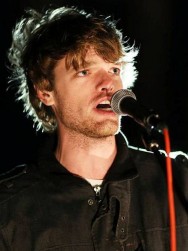 A boertjie born in Pretoria who grew up in Bloem and graduated at Stellenbosch. His life's trajectory resembles the Groot Trek in reverse. He studies Sustainable Development and attempts to be a poet sometimes. He has published poems in vi' Adam Small (2012) and Nuwe Stemme 5 (2013) and co-edited the Many Tongues multiligual translation anthology with Annel Pieterse. He has and always will prefer playing piano to rugby, sorry Pa.
Adrian van Wyk - Events Manager
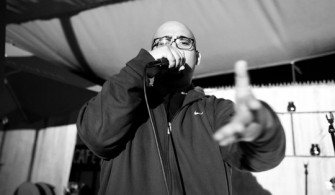
Adrian "Different" Van Wyk always dreamt that the little student town of Stellenbosch would be rocked by Poetry and Rap one day. This remained a dream until he met Pieter Odendaal and Annel Pieterse at an expressive cypher outside the Arts and Social Sciences building one summer night. Changing the manner in which Poetry is viewed, they have worked together since, stimulating an urban literary culture in this little student town. It's not uncommon to hear loud shouting and instrumental beats coming out of room 589 where The SLiP collective is housed.
Wamuwi Mbao - Project Coordinator
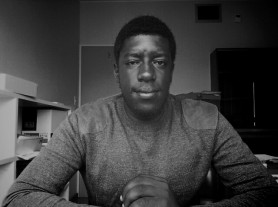 Wamuwi Mbao is a literary critic and cultural studies scholar. His short stories have been published in various collections. He lectures at Stellenbosch University on the practice of literary criticism and post-transitional South African subjectivities.
Annel Pieterse - Editor, translator
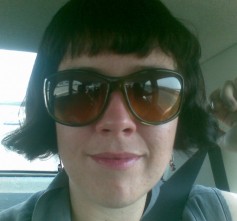
Annel Pieterse's mother, standing in the Wordsworth in Cape Town in 1985, realised that all the useful knowledge was available only in English, thus launching Annel's trajectory, fraught with ambivalence, to PhD student in the Stellenbosch English Department. Annel can now say 'green grass' without rolling her /r/, but has recently started wondering why this is supposed to be an achievement in a country where everyone rolls their /r/. Recently, she was fortunate enough to meet and collaborate on the Stellenbosch Literary Project with Pieter Odendaal and Adrian van Wyk, two fine poets and performers, who have helped her to explore and enjoy the riotous play of language in South Africa. She has a six-week-old baby boy and two dogs, who all get by perfectly fine without language.
Retha Ferguson - Webmaster, photographer
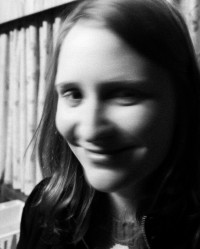
Retha is a Cape Town based photographer. She holds a degree in Fine Art even though she renounces the art world daily at breakfast, reclaims it at lunch and tries to exchange it for a pie and cola by afternoon. Some of the things she has done includes: Meeting Jürgen Schadeberg, meeting a car guard called Arnold who likes reading Shakespeare, swimming in a cave, photographing Breyten Breytenbach, contracting Malaria and exhibiting in Paris.
Carla Espost - Videographer
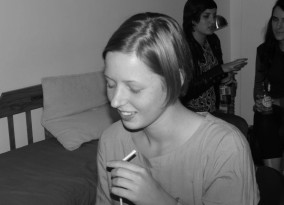
“The merging of creativity into every aspect of my life is something that I nurture everyday.” - Carla Inez Espost
Carla’s transition after finishing her art degree (at Stellenbosch) straight to UCT, where she is now busy with her masters in screenwriting, explains her keen interest in cinematic narrative as art. Working mostly in digital mediums, video and photography, Carla is currently in the process of writing a television series as well as directing a documentary about the local poetry scene. Carla’s work has been exhibited in The AVA gallery in Cape Town’s ‘Best of 2012’ graduate exhibition during January 2013 and one of her artworks has also been under the 100 nominated for The Sasol New Signatures 2012 Art Competition, this video was exhibited at the New Signatures exhibition during September 2012.


